
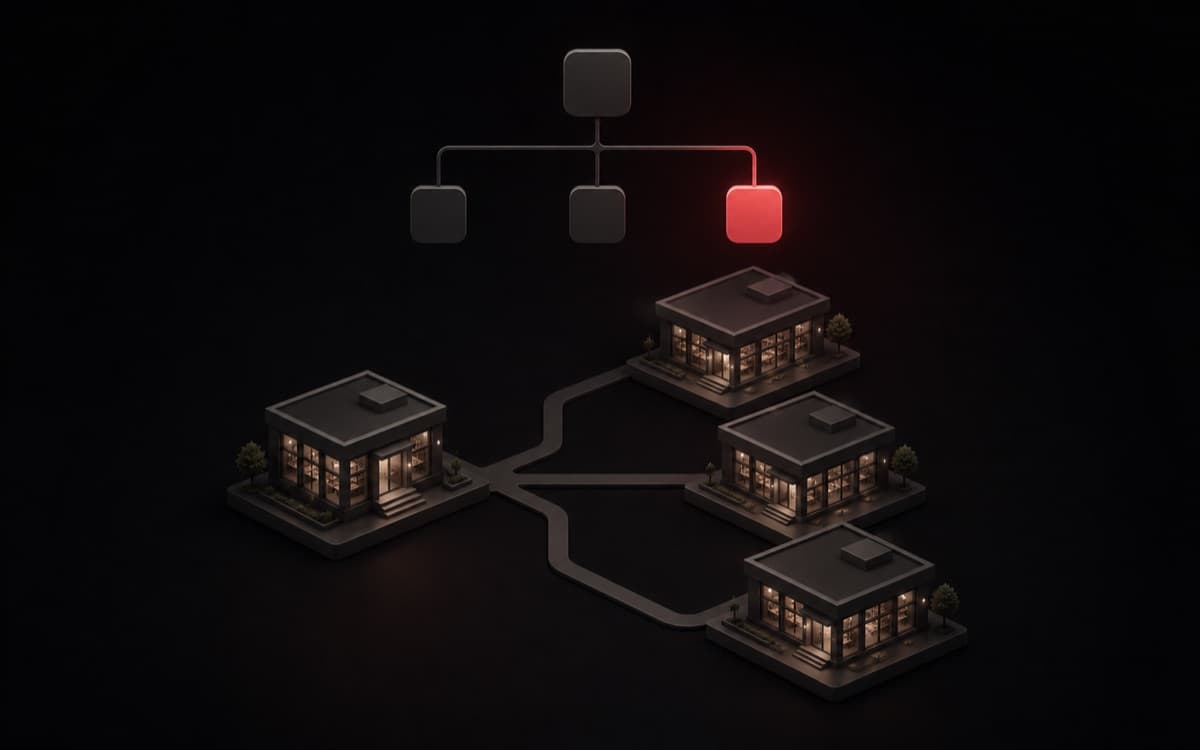
Rohan Mishra opened his first study library in Aliganj, Lucknow, in January 2024 with ₹4.2 lakh in savings, forty seats, and a handwritten register. By December 2025, he owned three libraries across Lucknow — Aliganj, Indira Nagar, and Gomti Nagar — with 127 enrolled students, two full-time staff members, and a single Brightgoal dashboard that showed him all three branches before he'd had his morning chai. This is the complete story of how he got there, including the three mistakes that nearly derailed him.
There is a moment every successful single-library owner eventually reaches. The waitlist grows longer than the seat count. The morning slot fills within two days of opening. Renewal messages go out and come back confirmed within hours. The library is producing more demand than it can absorb.
Most owners at this moment do one of two things. They raise prices modestly and enjoy the margin — the most rational short-term move. Or they open a second branch.
The second path is not obviously better. For every owner who scales successfully to two, three, or four branches, there is another who opened too early, hired the wrong person, neglected branch one while chasing branch two, and watched a profitable single library turn into two struggling ones. The gap between success and failure in library expansion is almost never about capital. It is about sequencing, systems, and self-knowledge.
Rohan's story is worth telling in full because he made both kinds of mistakes — the avoidable ones and the understandable ones — and because the systems he eventually built are exactly the kind of repeatable playbook that other owners can learn from. He agreed to share his actual numbers, his actual timeline, and his actual regrets. Very few successful operators will do that. The ones who will are the ones worth listening to.
How Branch One Became Real
Rohan had been a UPSC aspirant himself from 2019 to 2022. He knew exactly what he was solving for because he had lived the problem: Lucknow's Aliganj neighbourhood had plenty of coaching institutes but no serious paid study libraries within walking distance of the coaching clusters. Students who couldn't afford a private room at home were studying in chai shops and noisy internet cafés.
He rented a 900-square-foot first-floor space above a stationery shop on Faizabad Road for ₹14,000 per month. Fit-out — chairs, tables, a clean bathroom, two ceiling fans and a portable AC, tube lighting — cost him ₹1.1 lakh. He opened with two slots: Morning (6 AM–2 PM) and Evening (2 PM–10 PM), both priced at ₹900/month. He set up Brightgoal before opening day, entered his seats and slots, and enrolled his first twelve students — people he had personally recruited by standing outside the coaching institutes with a printed flyer.
The first three months were humbling. Month 1 closed at 22 enrolled students. Revenue: ₹19,800. Rent plus electricity was ₹16,200. He was netting under ₹4,000 a month. He had quit a ₹22,000/month back-office job for this.
By Month 4, however, something shifted. Word-of-mouth moved faster than he expected. UPSC aspirants in Lucknow talk. The library was clean, the seats were guaranteed (no hot-desk chaos), and Rohan was present and attentive. Month 5 closed at 38 students. Month 7 at 51. By Month 9, the library was running at 91% of theoretical maximum capacity — both Morning and Evening slots nearly full.
The waitlist started forming in Month 8. Eight students over one week asked about availability and found both slots full. Rohan took their numbers and told them he would call when a seat opened. By Month 10 he had fourteen names on the list. He was turning away paying customers.
That is when the second-branch conversation became real.
The Signal: When It Is Actually Time
The occupancy number matters, but it is not the only signal and arguably not the most important one. Rohan eventually articulated three conditions he believes must all be true before expansion makes sense. Looking back, all three were met when he started planning Branch Two — and only two were met when he opened it. That distinction matters, as we will see.
- 01Condition 1: Occupancy above 85% for three consecutive months
A single good month proves nothing. Demand can be seasonal (exam cycle spikes), promotional (a flyer push), or just variance. Three consecutive months above 85% means you have a structural demand excess, not a temporary one. Rohan hit this in Months 8, 9, and 10.
- 02Condition 2: A waitlist of at least ten names with real intent
Not curious enquiries — people who gave their number, came by to see the space, and confirmed they would enroll if a seat opened. Ten is approximately 20% of a typical 50-seat library. If you can't fill 20% of a new branch from your existing waitlist alone, the market signal is softer than it looks. Rohan had fourteen confirmed names.
- 03Condition 3: Systems that run without your daily presence
Branch Two will, for the first three to four months, absorb nearly all your attention. If Branch One requires you to be there every morning to open, chase fee payments, and manage check-ins, opening Branch Two doesn't double your capacity — it halves your effectiveness at both sites. Rohan had not fully solved this when he opened Branch Two. That became his first real mistake.
The waitlist made me feel ready. Looking back, the waitlist meant demand was ready. Whether I was ready was a different question — and I didn't ask it honestly enough.
Choosing the Second Location
The second-branch location decision is the most consequential decision in the expansion playbook. Get it wrong and you will spend eighteen months trying to fix an unfixable problem — the wrong location cannot be corrected by better management or better marketing. Rohan made this decision mostly right, with one flaw he would later correct.
His framework was simple and empirical: go where the students already are.
Lucknow's study-library demand is concentrated around its major coaching clusters. UPSC aspirants cluster around Hazratganj, Aliganj, and Indira Nagar. NEET and JEE students concentrate in Gomti Nagar and around the Medanta Medicity corridor where medical coaching institutes sit. SSC and banking students are spread across Charbagh (near the railway station, where students arriving from smaller cities find short-term accommodation) and Rajajipuram.
Rohan was already in Aliganj. The natural expansion target was Indira Nagar — close enough to share some word-of-mouth, different enough to serve a new student cluster, and notably lacking a quality paid library at the time of his scouting in Month 11.
He spent three afternoons standing outside five different properties in Indira Nagar between 7 AM and 9 AM, counting foot traffic. He spoke to students at tea stalls and asked where they studied. He looked at which coaching institutes had notice boards with student housing listings — a reliable proxy for student density. He checked auto-rickshaw routes and bus stops within a ten-minute walk of each potential site.
The property he chose was a second-floor space on Munshipulia Road: 1,100 square feet, ₹17,500/month rent, six months' security deposit required. More expensive than Aliganj but in a denser student catchment. He negotiated a three-month rent holiday in exchange for a two-year lease — his one smart financing move at this stage.
A rent holiday is the most underused negotiating tool in the library fit-out playbook. Landlords in most UP cities will trade two to three months free rent for a longer lease commitment — particularly for commercial first-floor spaces that have been empty for more than sixty days. Always ask before agreeing to full rent from day one.
The flaw in his location decision: he chose Indira Nagar partly because it was convenient — familiar territory, easy commute from his Aliganj branch. A purely data-driven analysis might have pointed him toward Gomti Nagar first, where competition was thinner and coaching density was rising faster. He chose geography of habit over geography of opportunity. This would cost him six months of slower growth at Branch Two relative to what Branch Three (Gomti Nagar) achieved from month one.
The Money: How He Financed Branch Two
Rohan's Branch Two financing came from three sources, and the balance between them was more deliberate than most owners achieve at this stage.
The fit-out cost came in at ₹1,38,000 — more than Branch One because he added a second AC unit and replaced the plastic chairs (which Branch One students had complained about) with higher-quality fabric-padded seating. Security deposit: ₹1,05,000 (six months). That left ₹17,000 as operating runway.
That was too thin. He knew it going in. The three-month rent holiday was meant to create the runway he didn't have, and it worked — but only barely. In retrospect, Rohan says he would have waited two more months to accumulate an additional ₹40,000–₹50,000 in profit from Branch One before opening. The stress of a razor-thin cash position in the first six weeks of Branch Two affected decision quality in ways that are hard to measure but easy to remember.
I told myself ₹17,000 runway was fine because students would enroll fast. Some did. But the first two weeks had unexpected costs — a fan replacement, a plumber visit, a sign that had to be redone. I was checking my bank balance every morning. That is not the mental state you want when you are also trying to sell your new library.
The friends-and-family loan was repaid in nine months, one month early. The personal savings reserve was drawn down to ₹35,000 by Month 2 of Branch Two but recovered by Month 5 as enrollment grew. He considers the financing structure acceptable in hindsight — not a disaster, but tighter than it should have been.
Mistake 1: Opening Branch Two Before Branch One Had a Staff System
This is the mistake Rohan ranks first. Not because it was the most damaging in absolute terms — it wasn't — but because it was the most preventable and the one he most clearly should have seen coming.
When Branch Two opened, Rohan was spending three to four hours a day there — greeting new students, handling enrollment questions, fixing small operational problems that any new venue produces in its first month. That was time taken from Aliganj. And at Aliganj, without his daily presence, three things deteriorated:
-
Renewal follow-up became slower. Brightgoal's automatic reminders still went out, but the personal touch of Rohan calling students who hadn't responded dropped to near-zero. Renewal rate at Aliganj fell from 82% to 71% in Month 12.
-
A fee dispute that would have been a five-minute conversation became a three-week standoff because Rohan wasn't on-site to address it early.
-
A student enrolled in the Morning slot was regularly arriving 45 minutes late and occupying a seat that a prospective walk-in wanted to see — Rohan wasn't there to handle the conversation, and no one else had authority to.
None of these were existential. But they compounded. And they all had the same root cause: Branch One had no one empowered to handle operational decisions in Rohan's absence.
- The fix: hire and train before you leave, not after. Rohan's eventual solution was to hire Kavita, a former UPSC aspirant who had been a regular at the Aliganj library, as a part-time branch assistant six weeks into Branch Two's operation. She already knew the students, already knew the space, and needed minimal training. He should have done this before Branch Two opened — the relationship was already there. He waited because he was worried about the salary cost at a thin-margin moment. The cost of waiting was higher than the salary would have been.
- Staff permissions in Brightgoal let you delegate without handing over everything. When Kavita joined, Rohan used Brightgoal's staff account system to give her access to the Aliganj branch data — enrollment records, payment history, renewal status — without giving her access to Branch Two or Three's finances. She could see who needed a renewal follow-up call, which seats were occupied, and which students had open fee disputes. She could mark payments received. She could not change slot pricing or access Rohan's bank-linked payout settings. That separation of permissions was essential. She needed just enough access to run the branch day-to-day; she did not need full owner-level visibility.
- Key-person dependency is a silent risk at single-library scale that becomes a visible crisis at two libraries. Every library owner who runs their branch alone is creating a key-person dependency. A sick day, a family emergency, or simply the opening of a second branch exposes the dependency immediately. The time to solve it is before you need to — which means before expansion, not during.
Building the Staff System: Permissions, Trust, and the Right Hire
Kavita started at ₹8,000/month for 20 hours per week — a part-time arrangement that matched the actual workload at a mostly self-running 40-seat library. Within three months, as Rohan opened Branch Three, he expanded her to full-time at ₹13,500/month and gave her formal responsibility for Aliganj operations.
He also hired Deepak, a commerce graduate from Kanpur who had relocated to Lucknow for a competitive exam, as a part-time assistant for Indira Nagar. Deepak's arrangement was similar: ₹7,500/month, 18 hours per week, with access to Branch Two's Brightgoal data and explicit authority to handle day-to-day matters.
The staff permission model that Brightgoal uses became the operational backbone of the three-branch system. Rohan sat down one afternoon and mapped exactly what each person needed to be able to see and do:
This permission structure solved a problem that sounds bureaucratic but is deeply human: the problem of appropriate authority. Kavita needed to feel genuinely responsible for Aliganj — not like a caretaker who had to call Rohan for every decision. Deepak needed the same sense of ownership at Indira Nagar. But Rohan needed confidence that neither could make structural changes that would affect the other branches or the overall finances.
The result was that both staff members report feeling genuinely empowered in their branches. Kavita handles the Aliganj morning shift, processes renewals, and sends fee reminders without referring to Rohan. He reviews the data at the end of each week, catches anything that needs his attention, and makes the decisions that are actually his to make.
The biggest mistake people make with staff is hiring them and then not trusting them with anything real. You either delegate or you don't. Having Brightgoal limit what they can actually change — not just what I tell them not to change — made it easier for me to actually delegate. I knew the guardrails were built in.
Keeping Quality Consistent Across Three Branches
The hardest part of multi-branch operations is not the logistics. It is the culture. A single library has a feel — the cleanliness standard, the noise level, how disputes are handled, whether the owner greets students by name. When you add branches, that feel becomes fragile because it lived in you and not in a system.
Rohan developed what he calls his "three non-negotiables" — the three things that are enforced identically at all three branches regardless of who is running them:
-
Every student is greeted by name on their first three visits, minimum. Kavita and Deepak were trained on this explicitly. Rohan keeps the enrolled-student list visible in Brightgoal and reviews new-enrollment names so he knows them if he visits.
-
The bathroom is checked every two hours. This sounds mundane. It is the cleanliness signal that matters most to students who have experienced bad libraries. A dirty bathroom in a study library communicates indifference to the student experience more loudly than any other signal.
-
No dispute over a seat is resolved in the student's presence. If a student is in the wrong seat, a staff member handles it privately — "Priya ji, I think there may have been a mix-up, let me check your booking" — never in a way that publicly corrects or embarrasses them. Rohan's first month was full of small public corrections that he now considers his worst operational memories.
Beyond these three, he runs a monthly "branch review" — not a formal meeting, but a ninety-minute Brightgoal data session where he looks at each branch's enrollment, renewal rate, revenue per slot, and occupancy per slot. The per-branch reporting in Brightgoal is what makes this possible without a spreadsheet. He can see all three libraries on one screen, compare renewal rates, and identify the branch that needs attention.
The Numbers Across Three Branches (December 2025)
Two years after opening Branch One, here is where Rohan's three-library portfolio stood:
Combined monthly fixed costs across all three branches (rent, electricity, staff, miscellaneous):
Monthly net, before personal income tax and any loan repayments: ₹33,000. That is not wealth-creating at current scale — but it is comfortable and growing, and it is Rohan's own business at age 29 with the UPSC aspirant he once was somewhere in his memory.
Gomti Nagar (Branch Three, opened Month 18) has zero staff cost because Rohan manages it himself — it is the newest branch, closest to his current residence, and he genuinely enjoys the morning shift there. He expects to hire a part-time assistant for it by Month 6 as enrollment approaches 50.
One Big Library vs Three Smaller Ones: The Real Tradeoff
A reasonable question at this point is whether Rohan would have been better off investing the Branch Two and Three capital into expanding Aliganj to a larger space — say, 100 seats instead of 40.
He has thought about this. Here is his honest analysis, and a structural comparison:
- Geographic diversification — no single rent increase destroys the business
- Three student communities and word-of-mouth engines instead of one
- Staff accountability easier to maintain in a 40-seat space than an 80-seat one
- Risk distributed — one branch's operational problem doesn't collapse all revenue
- Brightgoal shows all three on one dashboard — scale without complexity
- Each branch can serve a different student profile and price point
- Rent shock on a 100-seat space in a prime location would be ₹35,000+ per month minimum
- Staff management harder as headcount grows in a single space — noise, conflict, oversight
- All eggs in one basket: landlord dispute, local competition, or neighbourhood shift wipes everything
- Diminishing returns on word-of-mouth past ~60 seats — the library becomes anonymous
- A single Brightgoal library is faster to set up, but multi-library overhead is genuinely manageable with the right tool
The financial argument for three smaller libraries is strongest at the current scale. Each branch operates with a different landlord. If one rent renews at an unfavorable rate, the other two are not affected. If a competing library opens in Indira Nagar, it does not threaten Aliganj or Gomti Nagar. The resilience is structural.
The argument for one large library gets stronger if you are in a city where excellent locations are rare and the student concentration is extreme — a single street with five coaching institutes and no competition. In Lucknow, where demand is spread across multiple neighbourhoods, distributed branches are the better model.
Mistake 2: Under-Pricing Branch Two at Launch
When Branch Two opened in Indira Nagar, Rohan priced it identically to Aliganj: Morning and Evening slots at ₹900/month each.
This was a mistake, but not for the reason most owners would expect. The problem was not that ₹900 was too low for the Indira Nagar market — it may have been appropriate. The problem was that he set the price before he had market information, then discovered within six weeks that the coaching institute nearby had students paying ₹1,200/month to study in a poorly maintained space one block away.
He was charging 25% less than the competition for a demonstrably better product. Students who had been at the competing library and switched to his recognized it immediately. Several of them told him directly that they had expected him to be more expensive.
Raising prices six weeks after opening is one of the harder conversations in library ownership. Existing students enrolled at ₹900 feel a legitimate grievance when the price rises to ₹1,050. Rohan handled it by grandfathering everyone who had enrolled in the first six weeks — they stayed at ₹900 until their first renewal, at which point the new price applied. New enrollments from Week 7 onward were at ₹1,050. It worked, but the transition created two months of awkward two-tier pricing that he could have avoided entirely by doing competitive research before Day 1.
Do a one-afternoon pricing audit before you finalize your launch price for any new branch. Visit two or three competing paid libraries in the area as a prospective student. Ask to see their pricing. Check how well-maintained the spaces are. If you are opening something clearly better, price it clearly better from day one. You can always run a limited-time introductory offer with a specific end date — "first 20 students at ₹900/month, after which the price is ₹1,100" — which feels generous rather than arbitrary and sets the right expectation from the start.
Mistake 3: Neglecting Branch One During Branch Two's Opening Rush
Month 12 — the opening month of Branch Two — was the hardest month in Rohan's entire two-year run. He was present at Branch Two for six to eight hours every day, handling new enrollments, fixing operational issues, and doing the relationship-building that a new branch requires. Branch One ran on autopilot.
Autopilot is fine for a well-running machine with a trained operator. Branch One did not yet have a trained operator. Kavita was two weeks into the role. The autopilot assumption was premature.
He did not lose Branch One. But he lost ground. Renewal rate dropped from 82% to 71% in Month 12. Three students who should have renewed chose not to — not because the library was bad, but because the personal attention that had been a feature of the Aliganj experience had disappeared. One of them told Rohan this directly when he ran into her at a coaching institute three months later: "I would have stayed if you had been around. I didn't feel like it was your library anymore."
That sentence still bothers him.
- The first month of Branch Two is also a critical month for Branch One. This seems counterintuitive — you are launching something new, so naturally your attention goes there. But from the student's perspective at Branch One, nothing is new. Their library just got abandoned by its owner. Plan for this explicitly: schedule fixed hours at Branch One during Branch Two's opening month, even if it means going to Branch Two less.
- A trained operator at Branch One before Branch Two opens is not a luxury — it is a prerequisite. Rohan's timeline should have been: Month 10 — hire Kavita, train for four weeks. Month 11 — Kavita runs Aliganj alone for two weeks while Rohan observes from a distance. Month 12 — Branch Two opens with a functioning, tested operator at Branch One. Instead, the hire and the opening happened simultaneously. The overlap created four weeks of neither branch having proper attention.
- Renewal rate is the canary in the coal mine. In Month 12, Brightgoal's renewal data showed the drop from 82% to 71% in real time. Rohan saw it but attributed it to seasonal variance — January is traditionally a slower renewal month in Lucknow as students reassess their study plans after winter holidays. This was partly true. But it also masked the real signal. Treat any drop in renewal rate of more than five percentage points as a problem worth investigating, regardless of the calendar.
The Expansion Playbook: A Step-by-Step Checklist
- 1
Validate demand before scouting locations.
Three consecutive months above 85% occupancy, a waitlist of at least ten confirmed-intent names, and a renewal rate that has been stable or growing for the last six months. All three must be true. One or two is insufficient.
- 2
Build Branch One's staff system before leaving it.
Identify your Kavita — someone who already knows the library and the students, ideally a former student or a trusted regular. Hire them four to six weeks before Branch Two opens. Give them real responsibility and real authority via staff permissions in Brightgoal. Run a two-week shadow period where they handle everything and you observe. Only then open Branch Two.
- 3
Do the location research properly: foot traffic, competition audit, rent negotiation.
Spend three half-days at your shortlisted locations at 7–9 AM. Count students. Talk to tea-stall owners. Visit competing libraries as a prospective student — ask their price, sit for twenty minutes, form an honest opinion of the product you are competing against. Negotiate a rent holiday in exchange for a longer lease. Aim for at least 90 days of fixed cost runway in the bank before signing.
- 4
Price the new branch based on market data, not cost-plus or habit.
Your Aliganj price is not your Indira Nagar price by default. Different neighbourhoods have different willingness-to-pay. Different student profiles have different price sensitivity. Research this before launch. If you want to be generous to early enrollees, set a clear introductory price with a clear end date — never an open-ended low price you will struggle to raise later.
- 5
Open Branch Two with a deliberate schedule for Branch One presence.
Block time at Branch One explicitly during Branch Two's first month. Even four hours per week — a Monday morning and a Thursday evening — signals to Branch One students that you haven't left. It also surfaces problems early while you still have the bandwidth to address them.
- 6
Review Brightgoal's per-branch reports weekly, not monthly.
Renewal rate, per-slot occupancy, new enrollment count, and fee collection rate. These four numbers tell you almost everything about a branch's health. A weekly review takes twenty minutes and catches problems before they become trends. Monthly reviews see trends that are already six weeks old.
- 7
Hire Branch Three staff before Branch Three opens, not after.
By the time you open a third branch, the lesson from Mistake 1 should be embedded. Branch Three needs an operator from day one — even if it is a part-time hire who runs two half-days while you cover the rest. The cost is small relative to the risk of leaving two established branches undermanaged during a third opening.
Managing Cashflow Across Three Branches
The cashflow pattern for a three-branch library portfolio is not three times the single-branch pattern. It is more complex in two ways that catch owners by surprise.
First, branches renew on different cycles. Aliganj's enrolled base is mostly on a one-month renewal cycle, with peak renewals on the 1st and 15th. Indira Nagar skews toward three-month subscriptions because a larger share of its students are in a specific exam cycle (UPPSC mains, which has a predictable calendar). Gomti Nagar's pattern is still stabilising. The result is that monthly cash inflows are lumpy and asynchronous across branches. A month that looks lean at the portfolio level often has a strong renewal week at one branch and a gap at another.
Brightgoal's per-branch revenue view helps here but does not solve the underlying pattern. Rohan's practical solution: he maintains a combined operating float of ₹35,000–₹40,000 across the three branches — enough to cover any single branch's monthly costs from float if revenue is delayed. This float is kept in a separate zero-interest account and treated as untouchable except for branch costs. It was built over six months by directing a portion of each month's surplus there rather than to personal income.
Second, staff salary timing creates a predictable crunch. Kavita and Deepak are paid on the 5th of each month. If a branch's renewal cycle means that the bulk of fee collection happens on the 8th–12th, there are three to four days every month where salary has gone out and revenue has not yet arrived. Rohan solved this mechanically by collecting the first two weeks of each month's renewals in advance — students whose subscriptions expire before the 15th are reminded on the 1st and encouraged to renew early at no extra cost. This slightly front-loads cash collection and bridges the salary gap.
Brightgoal's fee collection tracking makes the early-reminder strategy easy to execute. You can see, at any point, which subscriptions expire in the next seven days and send a batch reminder with two clicks. The system does not automatically charge — students pay manually — but the visibility means you are never surprised by a gap in cash collection.
The Dashboard That Changed How He Thinks
Before Brightgoal's multi-library support, Rohan was managing two branches with two separate systems — a spreadsheet for Aliganj and a different app for Indira Nagar (he had tried a generic fee-management app for the second branch before switching to Brightgoal). The experience was clarifying about how bad fragmented management is.
The fundamental problem with two separate systems is that comparison becomes laborious. To know whether Indira Nagar's renewal rate was better or worse than Aliganj's, he had to export data from two different places, align the formats, and do the comparison manually. This is not a minor inconvenience — it is a structural barrier to the kind of cross-branch learning that is a small operator's primary competitive advantage over a franchise competitor with standardized processes.
A franchise library chain knows exactly what occupancy looks like across fifty branches. They have automated comparisons. They can identify the one branch that is performing unusually well and ask why. A small three-branch owner competing against that chain needs the same visibility, scaled appropriately.
With all three branches in Brightgoal, Rohan's morning review takes eleven minutes. He checks the notification feed (any enrollments, any fee payments, any renewals confirmed overnight), then the three-branch side-by-side occupancy view, then the renewal pipeline for the next seven days. If one branch shows a gap — say, Indira Nagar has six subscriptions expiring in the next five days and none of them have confirmed renewal yet — he can send targeted reminders from the same screen. He never exports a spreadsheet. He does not reconcile anything manually.
The psychological effect of this is underrated. When you can see all three branches in one clear view every morning, your mental model of the business is accurate and current. When you are managing from three separate systems with a two-day information lag, your mental model is always slightly wrong, and you make slightly wrong decisions. The compounding effect of slightly wrong decisions over twelve months is the difference between three branches that thrive and three branches that muddle.
I was skeptical about whether one dashboard for three branches would really change anything. Then one morning I noticed Gomti Nagar's renewal rate was down to 68% while the other two were at 79% and 83%. I went there that afternoon and found out a staff member at the coaching institute next door had been telling students I was closing. I fixed it in a day. Without the dashboard, I wouldn't have seen it for two weeks.
The Mistakes List: What He Would Do Differently
- Opened Branch Two six weeks before Branch One had a tested staff system. The right sequence: hire and train staff at Branch One, verify they can operate independently for two weeks, then open Branch Two. The overlap of hire and opening cost him a 11-point drop in Branch One's renewal rate that took three months to recover.
- Under-priced Branch Two at launch. Competitive research before pricing would have revealed that ₹1,050–₹1,100 was supportable in Indira Nagar from day one. The six-week price correction created an awkward grandfathering situation and two months of two-tier pricing. Price based on market research, never habit.
- Chose Indira Nagar for Branch Two partly out of familiarity. A neutral analysis might have pointed to Gomti Nagar first — a market with faster-growing coaching density and lower existing competition. He chose Indira Nagar partly because it was convenient. Branch Three (Gomti Nagar) hit 80% occupancy in Month 5; Branch Two (Indira Nagar) took Month 8. The market chose correctly even if the data wasn't consulted first.
- Maintained too thin a cash runway at Branch Two's opening. ₹17,000 in operating float at opening was not enough. Unexpected costs are not black swans in new branch launches — they are expected. The correct floor is 90 days of fixed costs in the bank before opening day, meaning roughly ₹90,000–₹95,000 for a typical UP branch at current cost levels.
- Did not standardise the three non-negotiables until Month 15. Rohan developed his branch quality framework — the greeting-by-name rule, the bathroom check, the dispute-handling protocol — from intuition and reflection. He formalised it and communicated it to Kavita and Deepak only in Month 15. For eight months, the standards existed in his head and were inconsistently applied. Written standards for a three-person team take two hours to create and eliminate months of inconsistency.
Frequently Asked Questions
How do you know it is actually time to expand, versus just time to raise prices?
Should a second branch be its own registered business or part of the same entity?
How do you prevent staff theft or misuse at a branch you cannot be present at daily?
What is the difference between franchise and owned expansion?
How long does it actually take for a new branch to turn profitable?
What Branch Four Looks Like
Rohan is already thinking about it. Not planning — thinking. The mental model has shifted from "should I expand?" to "when, where, and with what system?"
The candidate area is Hazratganj — central Lucknow, the highest footfall area in the city, home to multiple UPSC and state-services coaching institutes. The rent will be higher: he estimates ₹24,000–₹28,000/month for a suitable first-floor space. The demand signal is already there; he has had seventeen students ask about a Hazratganj branch over the last four months.
What is different about the Branch Four plan compared to Branch Two's planning: he has started the process twelve months before he intends to open. He is scouting locations without urgency, which means he can afford to walk away from a bad deal. He is identifying his Branch Four operator now — a person who will join in Month 8 as an assistant at Gomti Nagar and learn the system for four months before Branch Four opens. He is building a ₹1.2 lakh capital reserve specifically for Branch Four, at ₹10,000/month from portfolio surplus.
That is the difference between a first expansion and a fourth. The first is driven by the excitement of demand and constrained by imperfect information. The fourth is a planned execution against a model that has been tested three times.
Expansion is a systems problem disguised as a real-estate problem.
The question is never just "can I afford the rent?" It is: do I have a trained operator for Branch One before I leave it? Do I have 90 days of cash runway? Do I have a tested quality standard I can communicate and enforce without being present? The libraries that fail at expansion almost always fail on one of these three, not on the location or the demand.
Before you expand, make sure your single branch is performing as well as it can. Three Kanpur owners show how — no ads, no discounts, just operational clarity.
Three libraries, one dashboard.
Brightgoal's multi-library support, per-branch reporting, and staff permissions were built for exactly this: the owner who has outgrown a single branch and needs to scale without losing the quality that made the first branch work.