Two hundred lockers sounds like a minor logistics problem. It is not. It is a psychology problem wearing a logistics costume — and the library in Prayagraj that figured this out did it in thirty days with three process changes that cost nothing to implement.
The library that couldn't find its keys
Rajan runs a 240-seat paid study library near the Civil Lines area of Prayagraj. The space opened in late 2023 targeting UPSC aspirants — students who pay ₹1,200 to ₹2,500 per month for a quiet seat, a fixed time slot, and a personal locker to store their books, notes, and sometimes a second set of clothes. The lockers are a major selling point. Students don't want to lug Lakshmikant and GS Paper III back and forth every day. The locker is what makes the library feel like their place rather than a rented chair.
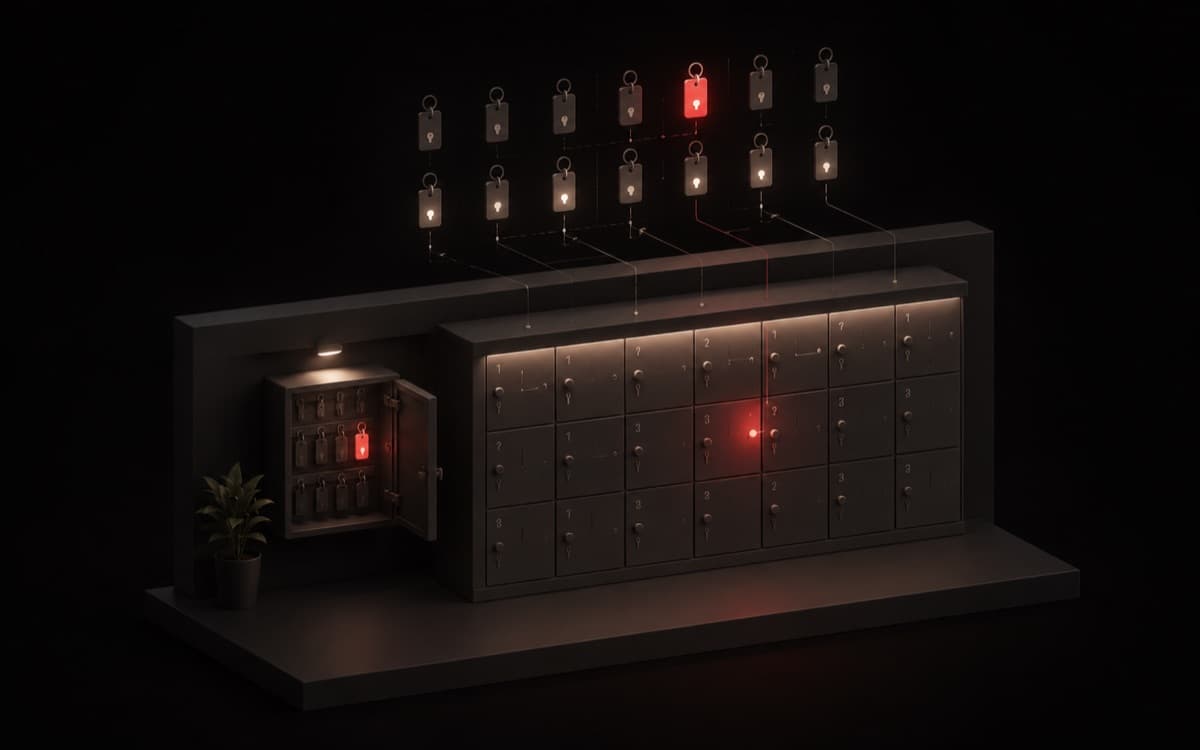
By early 2025, Rajan's locker system had quietly become a liability. He had 200 physical lockers. He had 200 keys. He could not, at any given moment, reliably tell you who had which key, which lockers were empty, or whether a key that hadn't been seen in a fortnight had been lost, stolen, or was sitting in someone's bag on the other side of the city. Staff had a handwritten register that was updated sometimes. When a student left — voluntarily or at the end of a subscription — the key handover was informal. Staff would say "remember to return the key" the way you say "don't forget your umbrella." And just as often, the umbrella was forgotten.
In the worst stretch of March 2025, Rajan counted what he later called "key incidents": a locker that was blocked because the previous student had walked off with the key; a new student who paid for a month but couldn't use the locker for the first six days while waiting for a locksmith; two students who both claimed locker 74 based on different staff members' verbal assurances; and one afternoon where three different people came to the front desk within a single hour asking about the same locker. Staff were spending an estimated 40 minutes a day firefighting locker disputes. That's over 20 hours a month on a problem that should have been zero.
Rajan reached out asking whether Brightgoal could help. The answer was yes — but the software alone wasn't the fix. The fix was process, supported by software. Here is exactly what changed.
Why this happens: diffusion of responsibility at scale
Before getting to the playbook, it's worth understanding why locker systems collapse in libraries of this size. The answer is one of the most documented phenomena in social psychology: diffusion of responsibility.
When something is "everyone's job," it becomes no one's job. In a 50-seat library with 30 lockers, the owner probably handles locker assignments personally and has a rough mental map of who has what. When the library scales to 200 lockers and 4–5 staff across two shifts, that mental map disappears. Each staff member assumes a colleague is tracking things. The register doesn't get updated because the person handling the key at that moment figures they'll "tell someone later." The key gets handed over at the front desk during a busy afternoon without any formal record because there's a queue and it feels rude to make the student wait while you dig out a logbook.
The second force at work is absence of personal accountability. When a student borrows a key with no deposit, no signature, and no formal acknowledgment, the key has no psychological weight. It's an object that was handed to them — not something they accepted responsibility for. The same student who would never dream of losing a ₹2,000 item they'd personally purchased will misplace a library key because they never felt they owned the responsibility of keeping it safe.
A deposit changes this. Not primarily because it creates financial risk (though it does), but because the act of paying a deposit — handing over money, receiving a receipt, signing an acknowledgment — is a commitment device. Behavioral economists have shown repeatedly that people honor commitments they've made formal more than commitments they've made informally, even when the financial stakes are small. A ₹200 deposit is not about recovering the cost of a new lock. It is about making the student feel, in their body, that this key is now their responsibility.
The third force is information asymmetry. When staff don't have a live, accurate list of who holds which locker, every dispute becomes a he-said-she-said negotiation. A student says "I was told locker 47 was mine." Another student says the same thing. Without a clear system-of-record, there is no referee. The argument either gets escalated to the owner (who is not always present) or resolved through social dynamics — whichever student pushed harder, or whichever staff member happened to remember something. Both outcomes are bad.
Brightgoal solves the information asymmetry. The deposit solves the accountability gap. A weekly audit solves the drift. Together, they close all three failure modes.
The before and after
- Digital locker register in Brightgoal: instant, searchable, correct
- Refundable ₹200 deposit signed at handover
- Weekly 5-minute audit catches drift before it compounds
- Pro-rata refunds when a student releases a locker mid-cycle
- New student gets a clean locker on day one, every time
- Handwritten register updated sometimes, wrong half the time
- No deposit, no signature, no formal accountability
- Disputes resolved by whoever argued hardest
- Students leaving mid-month got no refund; no incentive to return key
- New student waits days for locksmith because previous key is gone
The three-change playbook
- 1
Number every locker and make Brightgoal the source of truth
The first change is the most important and the easiest. Number every locker — physically, with a permanent adhesive label or paint pen. Not just a sticker that peels off after two monsoons. If you have 200 lockers, they are numbered 001 through 200. No exceptions, no gaps, no "the big one on the left near the water cooler."
Then, before you do anything else, open Brightgoal and add every one of those 200 lockers to your library's locker inventory. For each locker, assign a per-day rent (even if you're bundling the locker into a flat monthly fee — you can set the daily rate to ₹0, but the locker must exist as a record). This takes roughly 30 minutes for 200 lockers if you move quickly.
From this moment on, every locker assignment happens through Brightgoal. When a student enrolls with a locker, you assign the specific locker number in the system. Brightgoal marks that locker as occupied and ties it to the student's subscription with a start and end date. When the subscription ends, the locker is released in the system. When a student is assigned mid-subscription, Brightgoal calculates the pro-rata cost for the remaining days automatically — no mental arithmetic required.
The result: at any moment, any staff member can open Brightgoal and see the complete locker picture. Which lockers are occupied. Which student holds each locker. When their subscription ends. Which lockers are free and ready to assign. The handwritten register, with all its omissions and errors, is retired.
What 'source of truth' actually meansIt means that if Brightgoal says locker 074 is assigned to Aditya Kumar until June 30, then locker 074 is assigned to Aditya Kumar until June 30 — regardless of what any staff member remembers, regardless of what the old register says, regardless of what any student claims. When there is a dispute, you open the screen. The screen is right. This only works if every assignment and release is entered at the moment it happens, not later.
- 2
Collect a refundable deposit and get a signature at handover
The second change is a policy, not a software feature. When a student is assigned a locker, they pay a refundable key deposit — in Rajan's library, ₹200 — and they sign a brief handover acknowledgment. This can be a printed slip, a small notebook entry, or even a WhatsApp message where the student confirms receipt. The exact format matters less than the act of formalization.
The deposit is returned when the key is returned in working condition. If the key is lost, the deposit is forfeited and the student pays the cost of replacing the lock cylinder — typically ₹150 to ₹300 for a standard locker lock in UP. The policy is written on the enrollment form or displayed on a small card at the front desk.
Why ₹200 and not more? The psychology of deposits shows diminishing returns on behavior change above a threshold that feels "real but not punitive." At ₹200, a UPSC or NEET aspirant — typically spending ₹1,500+ per month at the library — will not feel the deposit is confiscatory, but they will feel a slight twinge of responsibility every time they handle the key. That twinge is the point. At ₹50, the deposit is ignored. At ₹500, some students push back and it becomes a friction point at enrollment. ₹150–₹250 is the sweet spot in the UP market.
The signature matters even more than the money. The act of signing — even on a basic printed receipt — shifts the cognitive frame from "I was given a key" to "I accepted responsibility for a key." This is well-documented in compliance research: written commitments are honored at significantly higher rates than verbal ones, particularly when the person signing understands there will be a follow-up (the return of the deposit).
What to put on the acknowledgment slipKeep it to three lines: the locker number, the deposit amount, and one sentence — "I will return this key at the end of my subscription or when I release the locker." Locker number, student name, date, signature. That's the whole document. Don't overthink it.
- 3
Run a five-minute weekly audit against the Brightgoal locker list
The third change is a weekly habit, not a one-time action. Every Monday morning (or whatever day suits your schedule), one staff member takes a printed or on-screen export of active locker assignments from Brightgoal and does a physical walkthrough. For each occupied locker in the system, they verify that the locker is indeed locked. For each locker the system shows as empty, they verify it is physically open and empty.
This sounds laborious. With 200 lockers in a well-organized space, it takes five to eight minutes. You're not opening every locker. You're walking down the row, checking whether the latch is in the locked or unlocked position, and ticking off the list. If Brightgoal says locker 112 is empty but the physical locker is locked shut, that's a discrepancy — investigate it before it becomes next week's dispute. If Brightgoal says locker 089 is assigned to a student whose subscription ended last Thursday, that's a release that wasn't processed — update the record immediately.
The audit does not need to find problems every week to justify its existence. Most weeks it won't. The value of the audit is accumulative: it prevents small discrepancies from silently compounding into the kind of multi-locker chaos that Rajan was living in. A single unprocessed release, left alone for three months, becomes the seed of a dispute when a new student is accidentally assigned the same locker. The weekly audit catches that seed in week one.
The audit also resets staff behaviorKnowing that the locker list will be physically verified every Monday creates an implicit accountability structure for staff. When they know a walkthrough is coming, they are more likely to enter the assignment or release in Brightgoal at the time it happens rather than "getting to it later." The audit doesn't just catch errors. It prevents them.
What Brightgoal handles automatically
These three process changes are about human behavior. Brightgoal handles the computational side without any manual work:
- 01Pro-rata locker release: exact to the day
When a student vacates a locker before their subscription ends, Brightgoal calculates the refund based on remaining days — no spreadsheet, no estimation, no argument about "half a month."
- 02Locker occupancy status: live, accurate
The moment you mark a locker as released in Brightgoal, it becomes available for the next assignment. No manual list update required. New students can be assigned an available locker the same day they enroll.
- 03Assignment history: permanent and searchable
Every locker assignment is logged with start date, end date, student name, and payment. If a student disputes whether they had locker 47 in February, you can look it up in ten seconds. The record doesn't age, fade, or get lost in a desk drawer.
- 04Auto GST billing: included on every invoice
When a locker fee is collected — at enrollment or as a mid-subscription add-on — Brightgoal generates a GST-compliant invoice automatically. No separate billing process for lockers.
Common failure modes (and why they happen)
- Staff entering assignments at end of shift instead of immediately. This is the single most common process failure. "I'll update Brightgoal later" almost always means "I'll update Brightgoal never." The rule must be non-negotiable: the locker assignment is entered in Brightgoal before the key is handed to the student. The screen is shown to the student to confirm. This takes thirty seconds and eliminates an entire category of errors.
- Letting departing students leave without key return. This happens especially at the end of a busy afternoon when the student says "I'll drop the key tomorrow." Tomorrow frequently becomes never. Policy: deposit is not refunded until the key is physically in your hand. No key, no refund. Soft on this once and students will learn that the deadline is negotiable.
- Assigning lockers verbally without confirming in the system first. A staff member looks at the row, sees a locker is physically open, and tells a student it's theirs — without checking whether Brightgoal has it marked as available. Sometimes the previous student had released the locker physically but the record hadn't been updated. Two students now have a verbal claim to the same locker. Check the system first. Always.
- Skipping the weekly audit for two or three consecutive weeks. The audit is not optional maintenance — it is the mechanism that keeps the system honest. Libraries that skip three weeks in a row invariably find themselves with four or five discrepancies when they finally run it, by which point each discrepancy requires investigation and potentially an awkward student conversation. Weekly takes five minutes. Monthly takes an hour and involves arguments.
- Not numbering lockers properly before going live in the system. If locker numbers aren't permanently and clearly marked, staff and students will start referring to lockers by their physical location ("the one near the window on the second row") which maps differently depending on who's describing it. Proper numbering sounds trivial. In practice, libraries that skip it build ambiguity into the foundation of the whole system.
Results: one month in Prayagraj
Rajan implemented all three changes in the first week of April 2025. By the end of April, he counted key incidents again.
The remaining incidents in April were all traceable to the transition period — a handful of legacy students who had been assigned lockers under the old system and hadn't yet been formally migrated into Brightgoal. By May, those were resolved and the incident count dropped further. Staff time on locker disputes went from approximately 40 minutes a day to under five.
More interestingly, Rajan noticed a secondary effect he hadn't anticipated: students started asking about locker availability before they asked about seat availability. The locker had always been a selling point, but once the system became reliable and visible, it became a differentiator. Students who visited competing libraries and found their locker systems vague or chaotic specifically mentioned it when choosing Brightgoal-managed libraries. A boring backend process had become a piece of reputation.
The locker is your library's storage promise — honor it with a system.
A locker that a student can't access on day one, or that gets double-assigned, or whose key disappears for a week, damages trust in a way that no discount or free month will fully repair. The playbook here is not complicated: number everything, make the digital record authoritative, create personal accountability at handover, and audit the gap between the physical world and the digital record once a week. That's it. Three changes, five minutes a week, and the problem is largely solved.
Frequently asked questions
What should we charge if a student loses a key?
The deposit covers your baseline cost. If you've set the deposit at ₹200 and a replacement lock cylinder costs ₹180, you're roughly covered. The exact amount to charge over and above the deposit depends on your actual locksmith rates in your city — get a quote from two or three local locksmiths and post the rate on your fee schedule. In Lucknow and Kanpur, a standard locker lock replacement is typically ₹150–₹280 depending on the lock grade. Charge the actual cost plus ₹50–₹100 for staff time. Don't try to profit on it, but don't absorb the loss either. The student who lost the key pays the full replacement cost; the deposit simply reduces the friction of collection.
A student wants to release their locker mid-month. How does the refund work?
Brightgoal handles this automatically. When you release a student's locker in the system, Brightgoal calculates the pro-rata refund based on the number of remaining days in the subscription period. For example, if a student paid for a locker from the 1st of the month and releases it on the 18th, they've used 17 days. If the monthly locker fee was ₹300, the daily rate is ₹10 (₹300 ÷ 30), and the refund is ₹130 for the 13 unused days. The refund amount is shown on screen before you confirm the release, so there's no ambiguity and no manual calculation. The same logic applies to mid-subscription locker assignments — Brightgoal charges only for the remaining days, not the full month.
Can two students share a locker?
Shared lockers are structurally problematic and we'd recommend against them strongly. The key handover and deposit model breaks down immediately — who holds the key? If student A needs to access the locker at 6 AM and student B has the key, you have a conflict. If student A leaves and claims their portion of the deposit, what happens to B's access? More fundamentally, the accountability model depends on one key belonging to one person. The moment a key is shared, the diffusion of responsibility problem returns in full force. If space genuinely constrains you to fewer lockers than students who want them, manage it as a waitlist with clear occupancy terms — don't share keys.
What about students who use the library for just 15 days?
For very short-duration subscriptions, assess whether the locker is actually worth the overhead. A 15-day student who needs a locker is possible — they exist — but the handover, deposit collection, key tracking, and release process has a fixed cost in staff time that may not be worth it for a student who is essentially a trial user. Some libraries set a minimum subscription duration for locker eligibility (e.g. one month) or offer lockers only to students on specific time slots where they clearly intend to return daily. That's a business decision you make based on your space and student mix — Brightgoal will handle the pro-rata billing regardless of duration.
Our lockers are old and some don't have numbers. Where do we start?
Start with the audit, not the purchase. Before you buy new labels or get a sign-painter in, walk the space and create a numbering scheme on paper. Decide on the pattern: do you number left-to-right, top-to-bottom, by row? Write the scheme down, then implement it physically in one session — this takes an afternoon at most for 200 lockers if you have one person applying labels and one confirming the sequence. Then enter all 200 into Brightgoal before you process a single new assignment. The temptation is to "do it as you go" — number a locker when you assign it. Resist this. You'll end up with gaps, inconsistencies, and partial coverage that creates exactly the confusion you're trying to eliminate.
A boring system is a working system.
The libraries that run lockers best aren't doing anything clever — they're doing something consistent. Number them, record them, audit them. The students notice, even if they can't say exactly why.